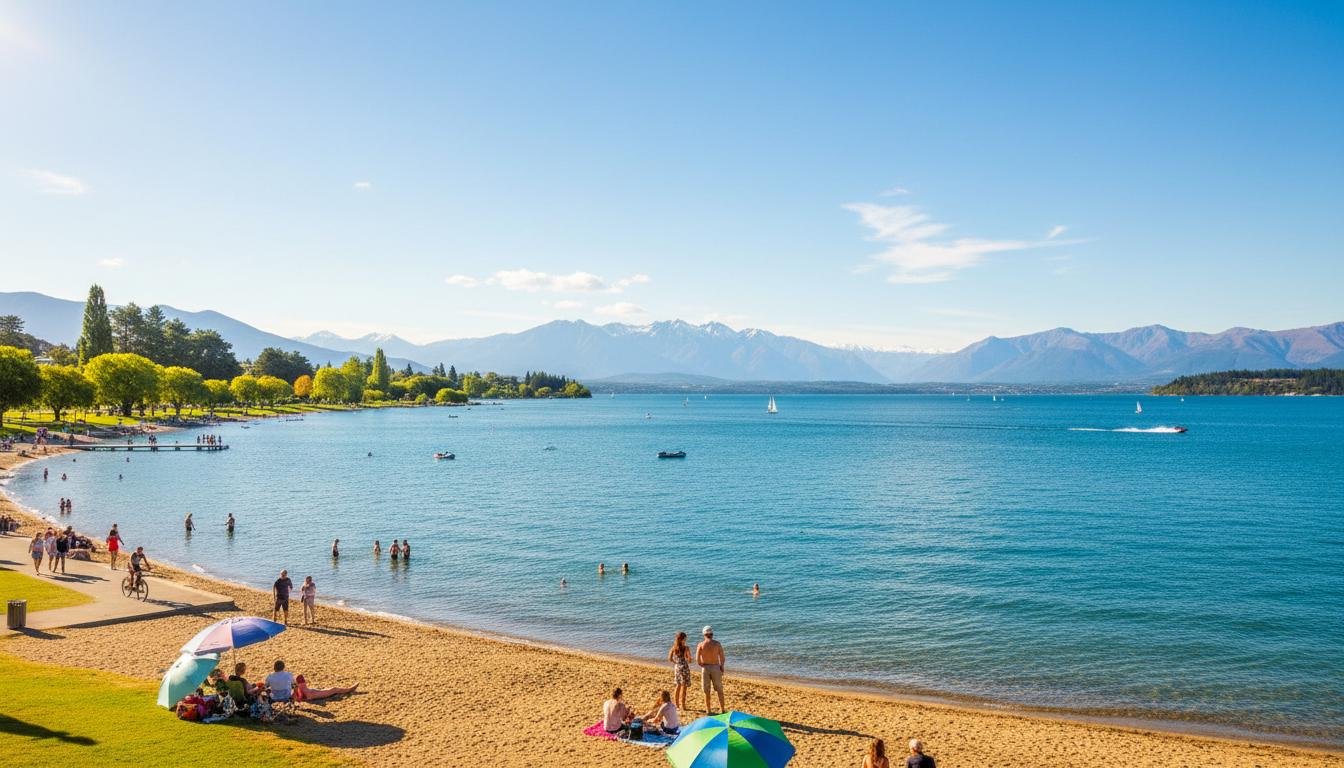
Planning a trip to the central North Island? Taupo weather is a mix of lake-cooled summers, crisp frosty mornings, and quick changes that can turn a blue-sky day breezy in an hour. This guide explains how Taupō’s climate works, what to expect in each season, and how to read the forecast so you can pick the right day for boating, biking, fishing, or the Tongariro Alpine Crossing.
You’ll find plain-English tips tailored to New Zealand conditions, a clear comparison of seasons, and practical steps for using the Taupo forecast. If you want fewer surprises and more good days on the lake, start here.
What is
Taupo weather is the local climate and day-to-day conditions around Lake Taupō and the town of Taupō, set on an inland volcanic plateau roughly 360 metres above sea level. The lake moderates temperatures, but the altitude and nearby mountains keep conditions cooler than coastal centres.
Expect four distinct seasons. Summers are warm without the sticky humidity of the upper North Island. Winters bring frequent frosts, calm blue days, and the odd icy southerly. Rain falls year-round, generally in short bursts with plenty of clear spells between systems. Snow in town is rare, but the nearby mountains get plenty.
Typical temperature ranges (not guarantees):
- Summer (Dec–Feb): daytime 20–27°C; nights 10–15°C
- Autumn (Mar–May): daytime 12–22°C; nights 4–10°C
- Winter (Jun–Aug): daytime 8–12°C; nights -3–4°C (frosts common)
- Spring (Sep–Nov): daytime 12–20°C; nights 5–10°C
Rainfall varies across the district, with the southern end (near Tūrangi and Tongariro National Park) generally wetter than the northern and western bays. Annual totals are roughly in the 900–1,200 mm range, depending on location and altitude.
| Season | What it feels like | Wind | Lake Taupo weather notes | Good for |
|---|---|---|---|---|
| Summer | Warm, dry spells with brief showers or afternoon cloud build-ups | Light morning winds; brisk afternoon lake breeze on sunny days | Warmest water temps; strong UV; fast-rising chop with squalls | Boating, swimming, biking, camping, evening fishing |
| Autumn | Mild days, cooler nights, many settled periods | Generally lighter; fog possible at dawn | Clearer skies; calmer lake mornings | Hikes, dawn fishing, photography |
| Winter | Cold nights, crisp sunny days between fronts | Light in highs; gusty with southerly changes | Frosts common; snow on nearby peaks; icy ramps at dawn | Skiing (Whakapapa/Tūroa), hot pools, clear-view days |
| Spring | Changeable—mix of showers, wind, and bright breaks | More wind; squally fronts followed by cool southerlies | Thunderstorms possible; fast-changing lake conditions | White-water, short walks, shoulder-season deals |
How it works
The drivers behind taupo weather are easy to grasp once you know the landscape and the winds that run through it.
- Prevailing westerlies: Weather systems sweep in from the Tasman Sea. As moist air climbs over the central plateau and Kaimanawa/Tongariro ranges, it cools and produces rain. When systems pass, drier, clearer air follows.
- Lake effect: Lake Taupō stores heat, taking the sting out of hot days and easing overnight lows near the shore. On sunny summer afternoons, a lake breeze often kicks in, bringing choppy conditions for boaties.
- Altitude and cold air: Taupō’s elevation promotes cool nights and frequent radiational frosts under clear winter skies. Valleys and flats can trap cold air and fog until mid-morning.
- Frontal changes: Spring and winter fronts can arrive quickly, flipping conditions from calm and mild to gusty with showers in under an hour. Watch for a classic prefrontal nor’west then a southerly change.
- Geothermal quirks: On cold mornings near hot streams, steam fog can reduce visibility locally even when the broader forecast looks fine.
Put simply: the lake smooths out extremes, the mountains make the rain, and the wind decides how fast your day changes.
Types / examples
Summer patterns
Most days start calm and bright. By early afternoon, heat over land draws air off the lake, building a fresh breeze from the north or northwest. On stable days you’ll get long, sunny spells. On humid days, brief showers or an evening thunderstorm can bubble up, especially south of the lake.
Boaties should plan morning missions and keep an eye on the horizon for dark lines that signal gust fronts. UV is very high; sunburn happens fast even when it’s breezy and not scorching.
Autumn patterns
Autumn often brings Taupō at its best: lighter winds, clear air, and settled high-pressure spells. Early fog can hover over the lake and valleys, lifting mid-morning. Temperatures soften, and lake chop tends to ease outside of fronts.
Winter patterns
Expect frosty starts and blue-sky afternoons between systems. Showery southerlies drop temperatures sharply, and wind chill can bite on exposed ridges. Snow is common on the mountains, not in town. Black ice can form on shaded roads at dawn, especially after rain followed by a clear night.
Spring patterns
Spring is the liveliest season. You can see four types of weather in a day: sunshine, a squall line, hail on the hilltops, then a calmer evening. Grasses dry quickly between showers, but wind can be persistent. Thunderstorms are most likely in late spring on warm, unstable afternoons.
Local microclimates around Lake Taupō
- Kinloch and Acacia Bay: Often a touch more sheltered from prevailing westerlies; afternoon lake breeze still arrives on hot days.
- Tūrangi (south end): Slightly cooler and wetter thanks to proximity to the ranges; more morning fog in winter.
- Northern bays (e.g., Whakaipo): Can feel warmer on calm, sunny days; quick to chop up when the breeze turns onshore.
- Tongariro National Park: Alpine conditions—very different from town. Always check mountain forecasts separately.
Pros and cons
- Pros
- Warm, comfortable summers without extreme humidity
- Plenty of calm mornings for boating and fishing
- Four true seasons, with crisp, clear winter days
- Lake moderates temperature spikes and dips near the shore
- Cons
- Fast changes—fronts and squalls can arrive quickly
- Frequent frosts in winter; black ice risk on roads
- Strong UV in summer; sunburn risk even when it’s breezy
- Wind and chop can make Lake Taupō challenging for small craft
How to use or choose
Use these steps to read the taupo weather like a local and plan better days.
- Check a trusted source: Start with the MetService Taupō forecast and the marine/lake wind maps. Cross-check with NIWA or WeatherWatch for a second view.
- Scan the next 48 hours: Look for fronts, wind shifts, and thunderstorm risk. A clean run of high pressure usually means settled mornings.
- Read the wind first: Over 15–20 knots from any quarter typically means choppy lake conditions. Morning calms often fade after lunch on sunny summer days.
- Note temperature swings: Clear nights after rain can mean frost and black ice. Pack layers even in summer; evenings cool off inland.
- Watch the sky: Building cumulus over the southern ranges in the afternoon can hint at showers pushing north.
- Mind the roads: For SH1 Desert Road and SH5 Napier–Taupō, check closures or ice warnings before leaving. Conditions aloft differ from town.
- Match plans to the window: Book boating or long rides early in the day. Save windier afternoons for short walks, hot pools, or sheltered bays.
Choosing the best time to visit Taupō
If your dates are flexible, late summer into early autumn often brings the most settled spell—warm water, lighter winds, and long, clear days. Winter suits skiers and hot-pool fans, with many calm, sunny days between fronts. Spring is value-packed but changeable; summer is prime for lake life if you respect the wind.
| Activity | Best window | Why it works | Weather watch-outs |
|---|---|---|---|
| Boating on Lake Taupō | Early mornings in summer and autumn | Calmer winds before the afternoon lake breeze | Squalls; thunderstorm outflows; rapid chop build-up |
| Trout fishing (lake and rivers) | Year-round; strong runs in winter rivers | Cooler water boosts fish activity; overcast days fish well | Rising river levels after rain; wading hazards |
| Tongariro Alpine Crossing | Summer and early autumn | Long daylight; more settled spells | High winds, low cloud, and rapid alpine changes |
| Mountain biking | All seasons; autumn is a standout | Firm trails, cool temps, fewer gusty days | Spring wind; winter frost/ice on shaded sections |
| Skiing (Whakapapa/Tūroa) | Winter, dependent on snow base | Frequent clear, cold days after fronts | Road chain controls; lift closures in high winds |
Packing list for taupo weather
- Year-round: breathable layers, windproof/rain jacket, hat, sunglasses, SPF 50+
- Summer: sun shirt, quick-dry shorts, reef shoes for rocky shores
- Winter: thermal base layer, gloves, beanie; ice scraper if you’re driving early
- Boating: proper PFD, warm spare layer, dry bag, headlamp for early launches
Where to check the Taupō forecast
- MetService Taupō town forecast and mountain/marine pages
- NIWA local outlooks and wind maps
- Waka Kotahi road conditions for SH1 Desert Road and SH5 Napier–Taupō
FAQ
What is taupo weather like most of the year?
Mild to warm in summer, cool in winter with frequent frosts, and changeable in spring. The lake keeps temperatures from getting too extreme.
Does it snow in Taupō town?
Snow in town is uncommon. Nearby mountains in Tongariro National Park get regular winter snow.
When is the best time to visit Taupō?
Late summer to early autumn (February–April) often brings warm water, lighter winds, and many settled days.
How windy does Lake Taupō get?
Afternoon breezes are common in summer, and fronts can bring strong gusts any time of year. Small boats should aim for morning sessions and check wind forecasts.
Is UV high in Taupō?
Yes. Summer UV is very high across New Zealand. Use SPF 50+, a hat, and sunglasses even when it’s breezy or partly cloudy.
How cold are Taupō winters?
Daytime highs often sit around 8–12°C, with nights near or below freezing on clear nights. Frosts are common.
What’s the wettest time?
Rain falls year-round, with more frequent fronts in winter and spring. Summer brings shorter showers and the odd thunderstorm.
How accurate is the Taupō 7-day forecast?
Short-range (1–3 days) is usually reliable. Beyond that, focus on trends—wind direction, fronts, and temperature shifts—rather than exact timing.
Any road weather issues I should know?
Yes. SH1 Desert Road can close for snow or ice in winter, and SH5 Napier–Taupō may be affected by heavy rain or slips. Check updates before driving.
What should I wear for a day on the lake?
Layer up with a windproof shell, bring sun protection, and pack a warm spare layer. Conditions can cool fast with wind changes.
How it works (quick recap)
Taupo weather is shaped by westerly systems, a heat-storing lake, and nearby ranges. That trio delivers warm but not oppressive summers, crisp winters, and quick shifts when fronts roll through. Check the wind first, plan mornings on the water, and carry a layer no matter the season.