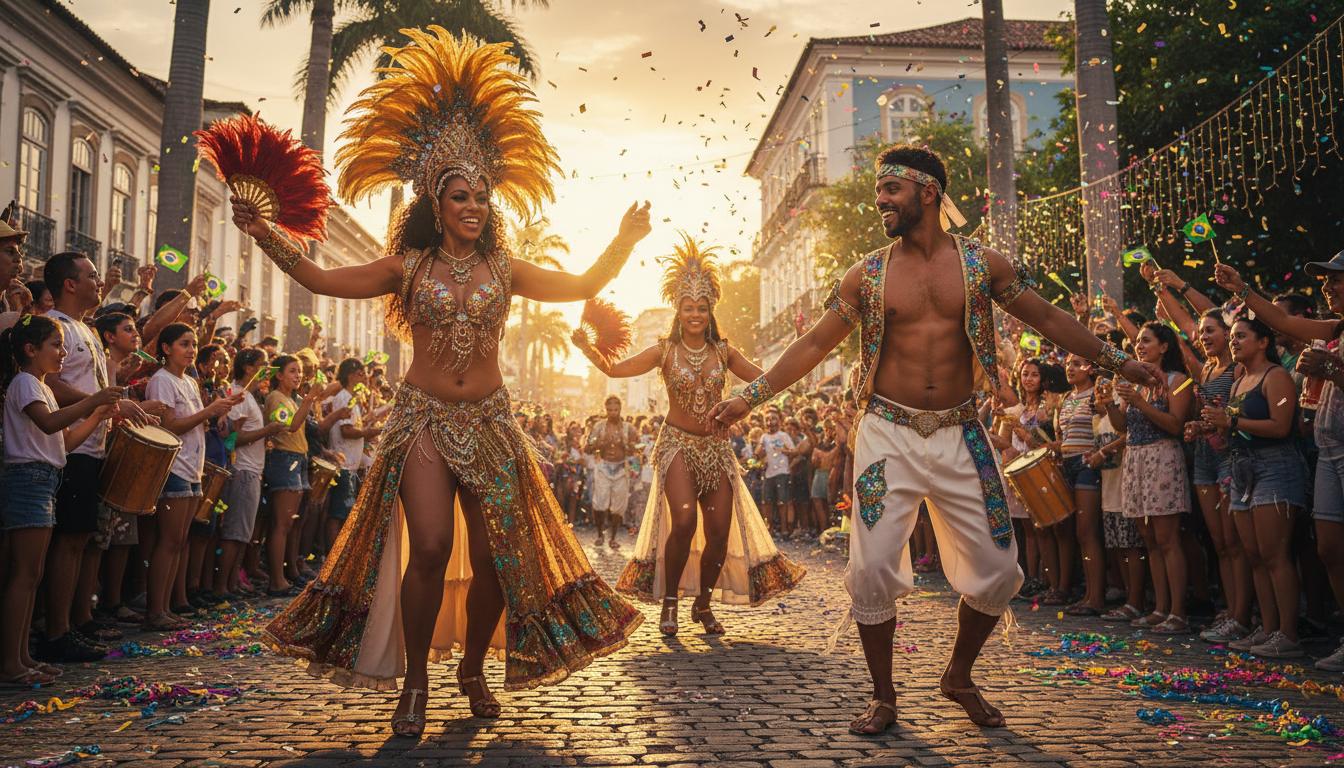
If the thump of drums makes your shoulders rise and your feet twitch, sambas will feel like home. This guide breaks down what sambas are, how the rhythm and dance work, the main styles you’ll hear and see, what to expect as a learner, and how New Zealanders can get started with confidence.
What is
Sambas are Brazilian rhythms and dances built on rich percussion, call-and-response, and joyful movement. The word covers several related styles rather than one single thing. You’ll find street parades with huge drum sections, intimate backyard jam sessions, elegant partner dancing, and lively pop crossovers—all under the sambas umbrella.
At the core is syncopation: accents sneak between the main beats, creating a forward pull that makes people move. Traditional instruments like surdo (bass drum), caixa (snare), repinique, tamborim, agogô, chocalho, pandeiro, and cuíca lay the groove. Cavaquinho (a small steel-string guitar) and acoustic guitar stack harmonies on top. Singers lead stories of neighbourhoods, love, football, and Carnival.
In Aotearoa New Zealand, sambas appear in community batucada groups, Latin dance schools, cultural festivals, and university clubs. You don’t need Portuguese or prior dance training to take part—curiosity is enough to start.
How it works
The music, layer by layer
Sambas use a steady two-beat bar with off-beat accents. Think of it as a conversation between the heartbeat and cheeky syncopation.
- Surdo: the heartbeat. Low drum tones mark the pulse and anchor the groove.
- Caixa and repinique: the chatter. Snare-like textures and sharp calls drive energy.
- Tamborim and agogô: the sparkle. Rapid patterns and bell tones add shine on top.
- Pandeiro and chocalho: the glue. Shakers and frame drums fill space and keep time.
- Cavaquinho and guitar: harmony. Bright, percussive strumming outlines chords.
- Vocals: the story. Choruses answer a lead singer in call-and-response style.
The effect is a rolling wave: bass on the beat, high parts dancing around it. The tempo ranges from relaxed to very fast, depending on the style, but the swing keeps it human and grounded.
The dance, in plain words
Most sambas use a bounce through the knees and ankles. The body stays tall, the hips stay free, and the feet mark time with quick, light steps. In samba no pé (the classic solo style), the basic feels like a fast walk that skims the floor. Partner styles like samba de gafieira use elastic connection, turns, and playful footwork that rides the music’s accents.
How a samba ensemble fits together
- Lead calls: the repinique or director uses cues to start breaks and changes.
- Breaks: short, tight unison riffs reset the energy and signal the next section.
- Groove blocks: each section repeats a signature pattern to lock the feel.
- Dynamics: parts drop in and out to shape tension and release.
In big parades, this machine-like precision supports dancers and floats for many minutes at a time. In small bars, the same logic shrinks into an intimate back-and-forth between players and singers.
Types / examples
“Samba” is a family. Here are the main sambas you’ll encounter, from parade to living room:
- Samba-enredo (Carnival samba): Huge drum lines and choruses crafted for Carnival processions. Loud, bright, and athletic.
- Batucada: A percussion-driven subset of samba-enredo. Drums only or drums-forward. Popular with community groups.
- Samba no pé: The solo dance you see with feathered costumes. Fast footwork, lifted posture, radiant energy.
- Samba de gafieira: Brazilian partner dance, smooth and playful. Suits live bands and mid-tempo tracks.
- Pagode: Backyard samba with cavaquinho, guitar, pandeiro, and voices. Relaxed, social, catchy choruses.
- Samba-reggae: Bahia-born blend—samba feel with reggae lilt and Afro-Brazilian drums. Earthy and hypnotic.
- Samba-rock: Swingy partner style that borrows from rock and soul while keeping a samba pulse.
For listening, try classics like “Aquarela do Brasil” and modern pagode hits. For a community feel, search for batucada groups in your city—Wellington has a well-known one—and catch them at local parades or cultural events.
Comparison of popular samba styles
| Style | Solo or Partner | Typical Setting | Sound/Feel | Beginner-Friendly | What You’ll Need |
|---|---|---|---|---|---|
| Samba-enredo / Batucada | Ensemble + Dancers | Parades, festivals, outdoor gigs | Powerful, fast, percussive | Yes (as drummer or dancer) | Practice pad or drum, ear protection, comfortable shoes |
| Samba no pé | Solo | Stage, parades, classes | Light, quick footwork | Yes | Flexible dance shoes or barefoot-friendly surface |
| Samba de gafieira | Partner | Social dance nights, live bands | Smooth, elastic, jazzy | Moderate | Comfortable dance shoes; no high-grip soles |
| Pagode | Group singalong | Bars, homes, small venues | Warm, acoustic, social | Yes | Cavaquinho or guitar (optional), hand percussion |
| Samba-reggae | Ensemble + Dancers | Street performances, workshops | Grounded, rolling, Afro-Brazilian | Yes | Drum or shaker; athletic shoes |
Pros and cons
Benefits of getting into sambas
- Fitness that feels like a party: cardio, coordination, and leg strength improve fast.
- Community: ensembles and classes are cooperative by nature.
- Rhythm skills: you’ll internalise syncopation that transfers to other music.
- Cultural literacy: learn rituals, songs, and stories behind the sound.
- Versatility: solo dance, partner dance, or drumming—pick your lane.
Potential downsides to consider
- Noise: drums carry. Practise times and venues matter in NZ suburbs.
- Gear costs: instruments and dance shoes add up if you go deep.
- Steep early curve: fast footwork and off-beats can frustrate beginners.
- Time commitment: ensembles and performances require regular rehearsals.
How to use or choose
Start here: a simple step-by-step plan
- Decide your path: solo dance, partner dance, drumming, or singing.
- Sample the sound: stream a few sambas and clap the main pulse to feel the groove.
- Find a local entry point: look for batucada groups, Latin dance studios, or community workshops in your city.
- Get the right basics: flexible shoes for dance; a practice pad or pandeiro for percussion.
- Learn one pattern or step: keep it small and repeat until it feels automatic.
- Join a beginner class: feedback speeds progress and keeps you honest on timing.
- Practise short and often: 10–15 minutes daily beats one long weekly grind.
- Play nice with neighbours: use mutes, practise indoors, and keep set hours.
- Perform or social dance: low-stakes events build confidence and musicality.
- Stay curious: explore different sambas to broaden your feel for the style.
Choosing a samba style in New Zealand
- If you love big energy: try batucada or samba-enredo. Community groups often welcome beginners and loan instruments.
- If you like social dance nights: pick samba de gafieira. It sits well alongside salsa and zouk scenes.
- If you enjoy acoustic jams: pagode suits singers and strummers. A pandeiro and a few chords go a long way.
- If you want solo showcase skills: start with samba no pé. Great for stage confidence and cardio.
Gear and practical tips
- Dance shoes: flexible soles that turn easily. Avoid heavy tread. Many start in socks on smooth floors.
- Drums: a practice pad or muted drum for home. Earplugs protect hearing—use them.
- Pandeiro: portable and versatile; ideal for NZ apartments.
- Clothing: breathable layers. You’ll sweat more than you expect.
- Warm-ups: ankles, calves, and hips first. It prevents strain during fast sambas.
Where to find classes and groups
- Community batucada groups in major cities often run beginner workshops.
- Latin dance studios in Auckland, Wellington, and Christchurch may offer samba no pé or gafieira blocks.
- University clubs and cultural festivals sometimes host intro sessions.
- Online platforms fill gaps if you live rurally—then visit a weekend workshop to lock it in.
FAQ
What’s the difference between samba and sambas?
Samba is the broader tradition. Sambas refers to its many styles—parade grooves, social dances, and acoustic jam forms—all sharing a syncopated Brazilian core.
Do I need a partner to learn?
No. Samba no pé is solo. Batucada is ensemble drumming. Samba de gafieira is partner-based, but studios rotate partners so you can join alone.
Is samba hard to learn?
The basics come quickly. The polish—timing, speed, and relaxed movement—takes practice. Short, frequent sessions help most learners in NZ balance work and study schedules.
How loud are samba drums?
Very loud in open air. At home, use a practice pad, mute, or towel. Keep to reasonable hours and choose a room away from shared walls.
What shoes should I wear?
For dance, flexible soles with light grip. Court or jazz shoes work. For drumming, supportive sneakers. Comfort beats looks, especially during long rehearsals.
Can kids learn sambas?
Yes. Many groups welcome juniors. Light instruments like shakers or pandeiro are a good start, and simple steps build coordination.
Do I need to speak Portuguese?
No. It helps with lyrics later, but rhythm and movement cross language barriers. You’ll pick up common phrases along the way.
Where can I hear sambas in New Zealand?
Watch for community parades, cultural festivals, and Latin dance socials. Some bars host live Brazilian nights. Look up local batucada ensembles and dance studios for events.
What’s a good first instrument?
Pandeiro for portability and versatility, or a practice pad if you plan to move into surdo or caixa. Both are apartment-friendly by NZ standards.
How do I avoid injury?
Warm up, start slow, and mind posture. For drummers, use ear protection. For dancers, bend through ankles and knees rather than the lower back.
Are sambas only for Carnival?
No. Carnival is a showcase, but sambas live year-round in bars, studios, and community halls—and increasingly in New Zealand too.
How fast are sambas?
Pagode and gafieira sit at comfortable social-dance speeds. Carnival styles run much faster. Learn to feel the off-beat first; speed comes later.
How do I progress after the basics?
Record your practice, join a group, and perform at low-pressure events. Learn one new step or pattern each week and keep a small rhythm or footwork journal.
Final thoughts
Sambas thrive on shared rhythm and open doors. Whether you’re drumming in a park, learning a solo step in a studio, or swaying to a backyard chorus, the beat always invites you back. Start small, be consistent, and let the groove do the heavy lifting.