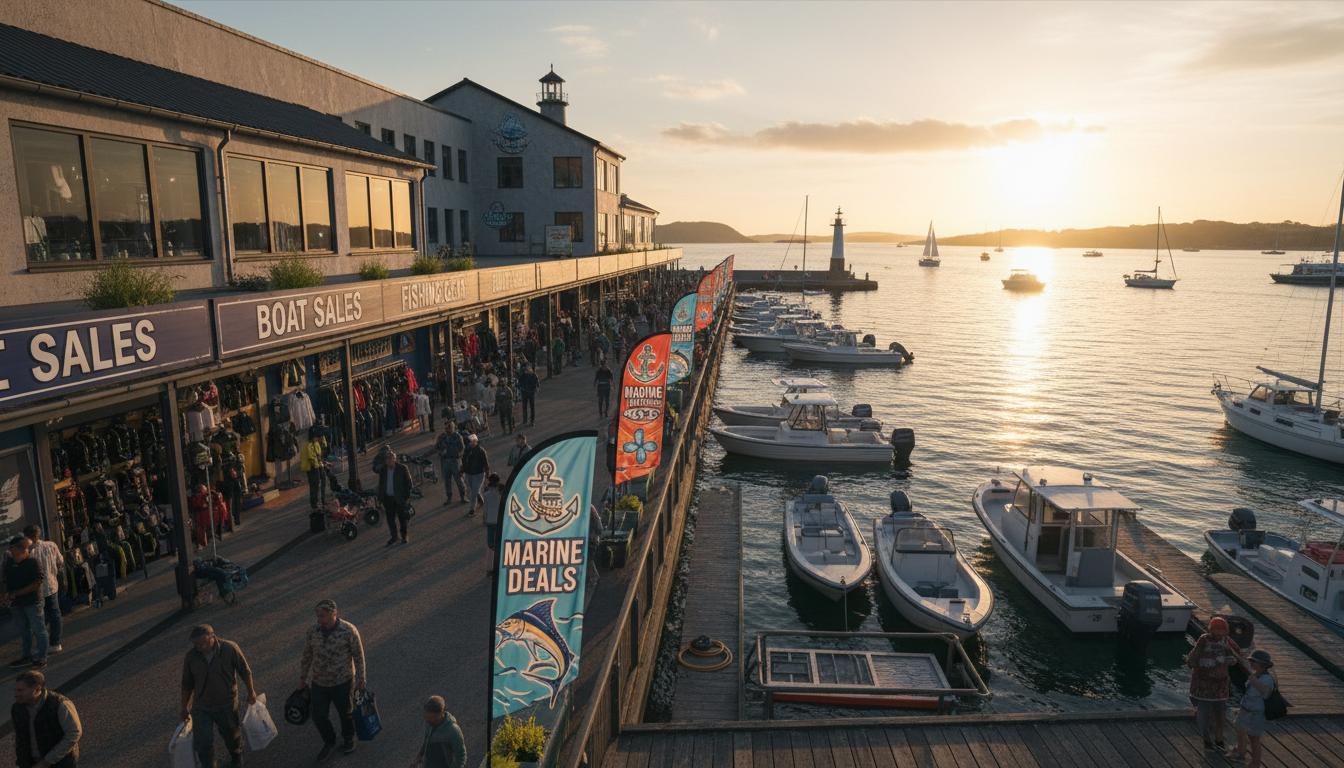
Prices on boat gear move with the tide. One week a fish finder is full RRP, the next it’s hundreds cheaper with a transducer thrown in. This guide shows New Zealanders how marine deals actually work, where to find them, and how to sort a genuine bargain from an expensive mistake.
You’ll learn the key places to shop, the types of discounts that appear through the year, the trade-offs behind clearance pricing, and a simple step-by-step method to choose the right gear. If you want the best marine deals without risking safety or warranty rights, start here.
What is
Marine deals are discounted offers on boating, fishing, dive, and watersports equipment sold in New Zealand by retailers, distributors, or private sellers. They include clearance sales, bundle pricing, seasonal promotions, price matches, ex-demo stock, and used gear sold below typical market rates.
Good marine deals lower your total cost of ownership without compromising safety, compliance, or after-sales support under New Zealand consumer law.
How it works
Marine pricing in Aotearoa tends to shift with product cycles and seasons. When new electronics land, last year’s models often drop. At the end of summer, watersports and apparel clear. Boat shows and major retail events spark limited-time specials. Retailers also negotiate exclusive bundles with manufacturers that add accessories for less than buying separately.
Behind the discount, a few moving parts decide whether a deal is worth it:
- Stock cycles: End-of-line and slow movers are commonly reduced. Expect limited sizes, colours, or transducer variants.
- Bundles: Rod-and-reel combos, sounder + transducer kits, or lifejacket family packs deliver real value if the components match your needs.
- Price matching: Many NZ stores will match authorised competitors on identical items in stock. Some exclude marketplace sellers.
- Parallel imports: Price can be sharp, but mapping, chargers, or local warranty support may differ. Check New Zealand compatibility.
- Freight: Long items (rods, kayaks) and dangerous goods (flares) cost more to ship. “Cheap” can vanish at checkout.
- CGA coverage: When you buy from a New Zealand business, the Consumer Guarantees Act applies. It doesn’t apply to private overseas imports.
| Where to find marine deals (NZ) | Typical discount | Best for | Shipping / pickup | Perks | Watch-outs |
|---|---|---|---|---|---|
| Marine Deals (retailer) | 10–40% on promos; deeper on clearance | Fishing combos, chandlery, dive, electronics | Nationwide delivery; Auckland pickup often available | Frequent bundles and daily specials | Hot items sell out fast; check exact transducer/spec |
| Burnsco | 10–30% with member specials | Safety gear, chandlery, trailer parts | Stores nationwide + online | Loyalty pricing; helpful in-store advice | Member pricing may require sign-up |
| Smart Marine | 10–35% sales; clearance bins | Electronics, fishing, anchoring | Stores in main centres + online | Install options at some locations | Limited quantities on hot-ticket items |
| Fish City / Hunting & Fishing | 10–30% promos | Fishing tackle, apparel, kayaks | Regional stores + online | Local expertise; spooled reels ready to go | Store-by-store stock variation |
| Torpedo7 and sports retailers | 15–40% during events | Kayaks, SUPs, wetsuits, roof racks | Nationwide stores + online | Strong seasonal markdowns | Marine-specific standards vary by item |
| Trade Me (used) | 20–70% vs new | Second-hand hardware, outboards, kayaks | Local pickup common | Bargains on quality brands | Check age, service history, and compliance |
| Boat shows and club sales | Show-only bundles | Electronics installs, package deals | On-site pickup or scheduled delivery | Hands-on demos; talk to installers | Time-limited; plan before you go |
Types / examples
Marine deals pop up across nearly every category. Common examples include:
- Electronics: Chartplotter + transducer kits, sounder upgrades with mapping vouchers, VHF radio + antenna packs.
- Safety: Lifejacket multipacks, PLB/EPIRB discounts ahead of holiday periods, flare kits on seasonal promo.
- Anchoring & hardware: Rope-and-chain combos, stainless fittings on clearance when sizes change.
- Fishing: Rod-and-reel combos, braid + leader bundles, tackle kits for specific species.
- Watersports: Ex-demo kayaks and SUPs, last-season wetsuits and booties reduced as sizes thin out.
- Maintenance: Oil and filter multi-buys, anode sets, bilge pumps and float switches on bundle discount.
- Lighting & power: LED nav light sets, solar panels with regulator included, lithium batteries with compatible chargers.
Typical real-world scenarios:
- A last-year 7-inch fish finder discounted 25% because a new model adds a minor software feature you may not need.
- Family PFD bundles with mixed sizes at a lower per-jacket price than buying individually.
- Kayak package including paddle, seat, and roof cradles for less than sourcing each piece.
- Clearance of imperial-thread stainless bolts when most buyers have moved to metric—great if your trailer still uses imperial.
Pros and cons
- Pros:
- Lower upfront cost and better kit density through bundles.
- Access to higher-tier brands that would be out of reach at full RRP.
- Chance to standardise gear across the boat (e.g., matching lifejackets) at a sensible price.
- Cons:
- Limited stock, sizes, or model variants—wait too long and it’s gone.
- Older firmware or mapping formats that may need paid updates.
- Parallel-import warranty or accessory compatibility differences.
- Freight surcharges on bulky or dangerous goods can erase savings.
How to use or choose
- Define the job. Write down exactly what the gear must do (e.g., “read bottom at 200 m while trolling,” “fit five adults, 150 N PFDs”).
- Set a total budget. Include shipping, installation, charts, consumables, and mounts.
- Check compliance. For safety gear, look for AS/NZS or SOLAS where relevant. For radios, ensure DSC/MMSI setup is possible in NZ.
- Match specs, not hype. For electronics, confirm transducer type, cone angles, CHIRP ranges, and map format compatible with NZ charts.
- Compare the true package. Bundles are great only if every item suits your boat and crew.
- Read the return and warranty terms. Buying from a NZ business gives CGA protection; understand the process for repairs or DOA items.
- Check stock and lead times. If it’s pre-order or ex-demo, ask about condition and delivery dates.
- Inspect or try on where fit matters. Lifejackets, wetsuits, masks, and fins are worth fitting before you commit.
- Use price alerts and price-matching. Keep a shortlist and compare like-for-like models, including shipping and accessories.
- Time your purchase. Seasonal patterns help:
- End of summer: wetsuits, snorkel gear, kayaks often clear.
- Boat show periods: electronics and install bundles sharpen.
- Black Friday and Boxing Day: broad discounts across categories.
- Pre-holiday rush: safety gear promos appear before long weekends.
FAQ
Are marine deals from parallel imports safe to buy?
They can be, but confirm local compatibility (charts, power plugs, chargers) and service options. If you buy from a New Zealand business, the Consumer Guarantees Act still applies. Manufacturer warranties may differ from NZ-authorised stock.
What should I check on a used marine electronics deal?
Ask for proof of age, serial number, and receipts; check screen condition; confirm transducer type and pinout; verify software version; ensure it supports NZ charts; and test GPS lock and networking (e.g., NMEA 2000) if possible.
Are cheap lifejackets okay for coastal boating?
Buy to fit the person and the trip. For most coastal boating, select properly rated PFDs (commonly 150 N for adults) that meet recognised standards. Try them on, adjust straps, and ensure a snug fit over your intended clothing.
Can I legally use a VHF bought on a marine deal straight away?
You need the proper operator certificate to use marine VHF in New Zealand (except in an emergency). For fixed DSC sets, arrange a ship station licence and MMSI, then program it correctly. Keep a copy of your callsign and MMSI details on board.
What about EPIRB and PLB discounts—anything to watch?
Ensure it’s a 406 MHz beacon approved for NZ use, with GPS if budget allows. After purchase, register it to your vessel or person with RCCNZ. Check battery expiry and storage bracket type (auto-release vs manual).
How do I avoid false savings on marine deals?
Compare the total cost: base price, shipping or DG fees, mounts, charts, install parts, and any paid firmware. If a bundle includes items you won’t use, factor that waste in.
Is it smart to buy last season’s fish finder?
Often yes. If the new model adds small software tweaks, the previous version can be outstanding value. Make sure it supports the transducer and mapping you need, and check for ongoing firmware support.
When are the best times of year for marine deals in NZ?
Expect strong offers around boat shows, end-of-season clearances, Black Friday, and Boxing Day. Local long weekends also spur promos on safety and camping crossover gear.
Should I buy a kayak or SUP as a package?
Packages can be excellent value if the paddle, leash, PFD, and roof cradles suit your body size and vehicle. Weigh the package against piecing together higher-grade components separately.
What return window should I look for when buying apparel on sale?
Sale items may have stricter return rules. Aim for at least a 14-day return if you cannot try on in store. Keep tags on and test fit over the layers you’ll actually wear on the water.
How do I check if a deal is the real model I want?
Match the exact model code, not just the series name. For electronics, read the box or listing for the transducer part number, chart region, and included cables.
Final tips for better marine deals
- Keep a shortlist of target models and their normal NZ street prices so you can spot a genuine reduction.
- Favour bundles that remove future spend—like including the right transducer or mounting hardware.
- Store receipts digitally, label serial numbers, and register products to unlock updates and support.
- For safety gear, never trade compliance for price. A “deal” that fails when you need it most isn’t a deal.
Used with a clear plan, marine deals help you outfit the boat properly, stay safe, and stretch the budget where it matters—fuel in the tank and time on the water.