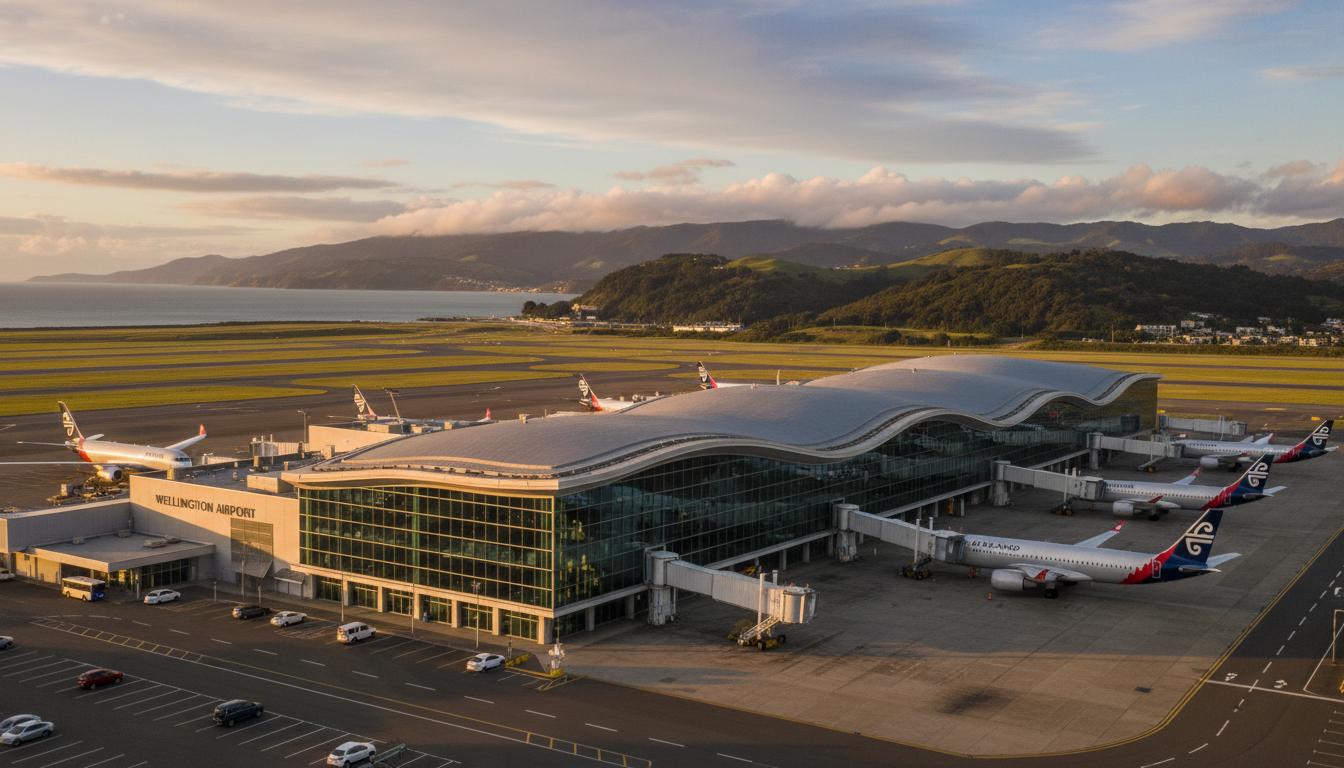
Wellington Airport is the capital’s busy front door: compact, close to the CBD, and famous for views over Lyall Bay—and the occasional lively landing. This guide gives New Zealand travellers everything they need to use wellington airport with confidence: how it works, transport options, pros and cons, practical steps, and answers to common questions.
What is
Wellington Airport (IATA: WLG) is the main aviation hub for the Wellington region. It sits in Rongotai, between the Miramar Peninsula and Lyall Bay, about 8 km from the city centre. The airport has a single runway of roughly 2 km and one integrated terminal with domestic and international areas. It handles a mix of domestic flights across Aotearoa and trans-Tasman or Pacific services.
Carriers typically include Air New Zealand, Jetstar, Qantas, Virgin Australia, Fiji Airways, and regional operators such as Sounds Air and Originair. Routes change with demand and seasons, so always check current schedules.
The terminal is straightforward to navigate: check-in halls on the ground level, domestic gates on one side, international processing on the other, and food and retail clustered after security. Free Wi‑Fi, family facilities, quiet spaces, and airline lounges are available.
Where it is and how to get there
Wellington Airport is in the suburb of Rongotai, next to Lyall Bay’s surf beach and a short drive from the CBD and Te Aro. Its location keeps travel times short. Depending on traffic, a trip between the airport and Wellington Station is often 15–30 minutes.
What it’s known for
- Quick city access: one of the shortest airport-to-CBD commutes in New Zealand.
- Efficient layout: one terminal, short walking distances.
- Windy conditions: Wellington’s famous northerlies and southerlies can add bumps and, sometimes, delays.
- Scenic approaches: coastline, hills, and harbour on a clear day.
How it works
The journey through wellington airport is designed to be simple, with clear signage and minimal transfers. The exact steps differ slightly for domestic and international flights.
Domestic departures
- Check in online or at airline kiosks/counters in the domestic hall.
- Bag drop for checked luggage at your airline’s counters.
- Security screening applies for many domestic jet services. Follow airport signage to the screening lanes.
- Proceed to the gate. Walking times are short.
International departures
- Check in and drop bags at international counters.
- Security screening and passport control follow. Liquids, aerosols, and gels are limited to containers of 100 ml or less in a 1-litre transparent bag.
- After border checks, you’ll find duty-free, shops, dining, and lounges before boarding.
Arrivals
- Domestic: collect bags at the domestic belt and exit to transport, parking, and pick-up zones.
- International: passport control, baggage claim, and biosecurity checks. Declare any food, plant, or animal products. Fines apply for undeclared risk items.
Security and baggage basics
- International: standard 100 ml liquid rules; laptops and large electronics screened separately.
- Domestic: liquid limits don’t apply in the same way; still follow Aviation Security guidance and airline rules.
- Power banks usually go in carry-on; check airline watt-hour limits.
- Sports gear and oversized items may need special handling; arrange in advance.
Types / examples
Common trip types from Wellington Airport
- Domestic business hops: early-morning returns to Auckland or Christchurch with hand luggage only.
- Weekend getaways: Queenstown or Nelson flights with checked ski gear or bikes (book sports baggage).
- Trans-Tasman family trips: Wellington to Sydney, Melbourne, or Brisbane, often timed to school holidays.
- Island breaks: seasonal Fiji services for winter sun—check schedules early.
Transport options at wellington airport
- Airport bus: Metlink’s Airport Express connects the terminal and Wellington Station via the CBD.
- Taxis: ranks are outside arrivals; fixed or metered fares depending on operator.
- Rideshare: app-based pick-up zones are signposted; options typically include Uber, Ola, and Zoomy.
- Shuttles: shared vans for door-to-door trips; pre-book recommended for groups.
- Car rental: major brands have desks at the terminal; pre-book for peak times.
- Private pick-up: short-stay areas and dedicated pick-up lanes near arrivals.
- Cycling: bike racks are available; check current routes and weather before you ride.
Comparison: getting between the CBD and Wellington Airport
| Mode | Typical travel time | Frequency | Where to find it | Best for |
|---|---|---|---|---|
| Airport Express bus | 15–35 minutes (traffic dependent) | Regular daytime service | Bus stop outside the terminal; CBD and Wellington Station stops | Budget-friendly, simple, solo travellers |
| Taxi | 15–30 minutes | On demand | Taxi rank outside arrivals | Convenience, groups with luggage |
| Rideshare | 15–30 minutes | On demand via app | Signed rideshare pick-up zones | App users, variable pricing |
| Shuttle (shared) | 25–50 minutes (multiple stops) | Pre-book or on demand | Shuttle area outside arrivals | Cost-sharing, door-to-door |
| Car rental | 15–30 minutes | Pre-book or walk-up | Rental desks in-terminal | Flexibility, side trips |
| Private pick-up | 15–30 minutes | N/A | Short-stay and pick-up lanes | Friends/family, quick exits |
Pros and cons
Why Wellington Airport works well
- Close to the city: short transfers mean more sleep and less stress.
- Compact terminal: easy wayfinding, minimal walking.
- Good frequency on domestic trunk routes: plenty of choice most days.
- Strong public transport link: the Airport Express makes the CBD connection simple.
Trade-offs to consider
- Weather: wind and low cloud can cause delays or cancellations.
- Runway length: limits some long-haul options; international network is focused on Australia and seasonal Pacific services.
- Peak-time pressure: queues can build before early waves and after work.
- Parking demand: on-site parks fill during holidays; pre-book if you must drive.
How to use or choose
Step-by-step: from door to departure at wellington airport
- Check your flight: confirm time, terminal area (domestic/international), and any schedule changes.
- Pick transport: bus for simplicity, taxi/rideshare for door-to-door, or drive and pre-book parking.
- Arrive with buffer: allow extra time at peaks and in poor weather.
- Check in: online if possible; use kiosks or counters if needed. Attach bag tags clearly.
- Clear security: keep laptops and liquids ready; follow AvSec guidance.
- Find your gate: screens update frequently; listen for announcements.
- Eat and charge: grab a bite, refill a bottle, and top up devices before boarding.
- Board early: Wellington boardings move quickly; be ready when your zone or row is called.
Choosing flights, seats, and timing
- Flight time: morning flights often see smoother conditions, but Wellington weather changes fast—build in slack if you have a tight connection.
- Seat choice: over-wing seats can feel steadier in turbulence; front rows speed up deplaning.
- Connection strategy: if connecting internationally in Auckland or Christchurch, leave generous transfer time.
- Checked vs carry-on: hand luggage saves time on short hops; check sports gear early and follow airline rules.
Picking transport and parking
- Public transport: consistent, avoids parking stress, and suits solo travellers.
- Rideshare/taxi: ideal with bulky luggage or late arrivals.
- Driving: pre-book on-site parking, especially during school holidays and long weekends.
Family and accessibility tips
- Families: pack snacks, empty drink bottles for refills, and small activities for kids.
- Accessibility: request assistance with your airline ahead of time; accessible parking and drop-off areas are near the terminal.
- Dietary needs: scan food menus airside; options for common dietary preferences are usually available.
FAQ
What is Wellington Airport’s code?
Wellington Airport’s IATA code is WLG.
How far is wellington airport from the city centre?
About 8 km by road. Typical travel time to the CBD or Wellington Station is 15–30 minutes depending on traffic.
Is there a train to the airport?
No. The easiest public transport link is the Airport Express bus to and from Wellington Station, where trains and other Metlink services connect.
Can I get free Wi‑Fi at wellington airport?
Yes. Free Wi‑Fi is available throughout the terminal.
Which airlines fly internationally from Wellington Airport?
International services typically include routes to Australia and seasonal Pacific flights. Carriers commonly include Air New Zealand, Qantas, Virgin Australia, and Fiji Airways. Check current schedules, as routes can change.
Do I need to follow liquid rules on domestic flights?
New Zealand’s 100 ml liquid limit applies to international departures. Domestic flights have different rules, but all items must pass security screening. Follow AvSec and airline guidance.
Is there duty-free at wellington airport?
Yes. Duty-free shopping is available after international security and border control, and on arrival from overseas.
Can I pre-book parking?
Yes. On-site parking can be pre-booked via the Wellington Airport website. This is recommended during peak travel periods.
Are there lounges at Wellington Airport?
Yes. Air New Zealand and Qantas operate lounges for eligible customers, and a pay-to-enter lounge option is available for others, subject to capacity.
What if my flight is disrupted by weather?
Follow airline instructions in the app or by SMS/email. Rebooking is usually managed by the airline. If you have a connection, contact your carrier immediately to protect onward travel.
Does wellington airport offer car rental?
Yes. Major car rental companies have desks in the terminal. Pre-booking is wise, especially around holidays.
What biosecurity rules apply on arrival?
New Zealand has strict biosecurity. Declare any food, plant, or animal items on your arrival card. If in doubt, declare it or dispose of it in the bins provided.
Where is rideshare pick-up at Wellington Airport?
Dedicated rideshare zones are signposted outside arrivals. Check your app for the exact bay when you request a car.
Any quick packing tips for Wellington’s weather?
Bring a light, waterproof layer and secure small items in your bag—wind gusts are real. For flights, keep essentials (meds, chargers, ID) in your carry-on.
Final word
Wellington Airport keeps travel simple: short transfers, clear signage, and plenty of flights on the main domestic routes. Know the basics, plan for the weather, and you’ll glide through WLG with time to spare for a coffee—ideally with a view of the runway and the surf beyond.